

Before diving into aging mechanisms, let's establish what we are dealing with.
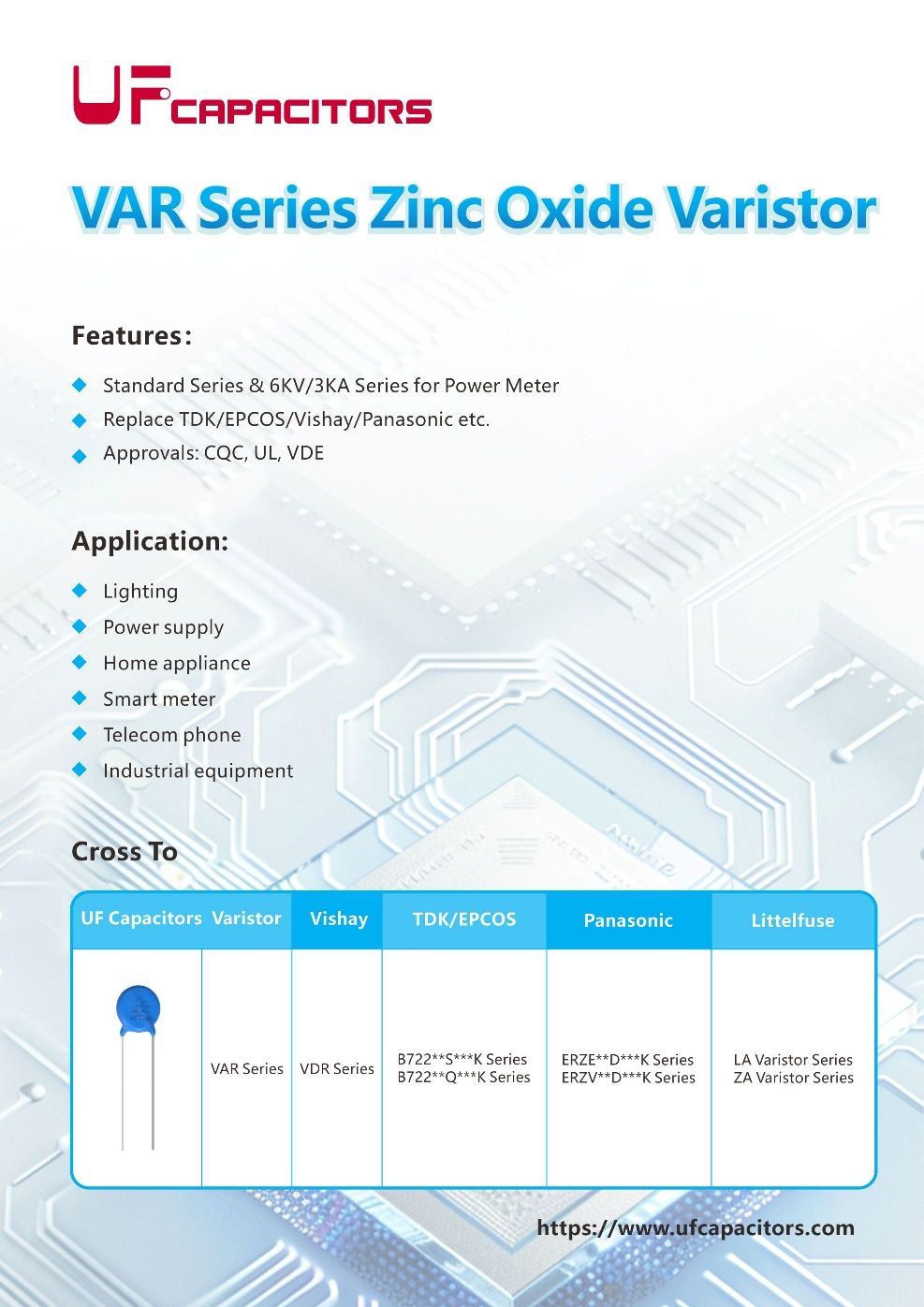
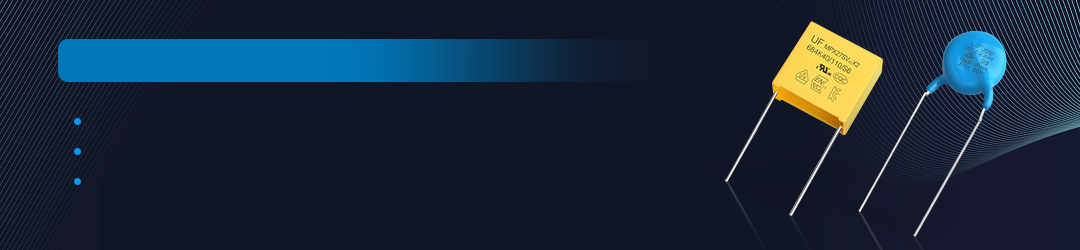
A Metal Oxide Varistor is a voltage-dependent resistor. Under normal operating conditions, it exhibits high resistance (almost an open circuit). When a voltage surge exceeds its threshold, it rapidly switches to a low-resistance state, clamping the overvoltage and diverting harmful current away from sensitive electronics.
This magical behavior comes from its microstructure: millions of zinc oxide (ZnO) grains surrounded by thin insulating layers (grain boundaries) made of other metal oxides. These grain boundaries create electrical barriers that break down momentarily under high voltage—then recover.
Yes. Absolutely.
Unlike a perfect switch that can operate infinitely, each surge event causes microscopic, irreversible damage to the MOV's internal structure. This is not a myth—it is well-documented in IEEE and IEC standards, and extensively studied in materials science literature.
Think of it like bending a paperclip. You can bend it once, twice, ten times. But eventually, the metal fatigues and snaps. An MOV follows the same pattern, just at the atomic level.
1. Ion Migration at Grain Boundaries
The primary aging mechanism is ion migration within the ZnO grain boundaries.
When an MOV is subjected to continuous electrical stress (AC line voltage) or repetitive surge currents, zinc ions and other defects in the crystal lattice slowly drift. This migration lowers and distorts the Schottky-like potential barriers that give the MOV its voltage-dependent properties.
Imagine a dam wall slowly eroding. At first, it holds. But with each storm, tiny cracks form. Eventually, water seeps through constantly.
2. Thermal Runaway Feedback Loop
Here is where it gets dangerous:
Degraded barriers → Increased leakage current
Higher leakage → More internal heat
More heat → Accelerated ion migration
Faster migration → Further degradation
This positive feedback loop is why MOV aging is often exponential, not linear. Once the process passes a certain threshold, failure becomes inevitable.
3. Cumulative Damage from Surges
Every surge event—whether a massive lightning strike or a small switching transient—inflicts cumulative damage. The MOV may survive hundreds of small surges but fail catastrophically on the next one, even if that surge is within its rated capacity.
You cannot see aging with your eyes (unless the MOV has already exploded). But you can measure it.
1. Leakage Current (The Early Warning Signal)
What happens: As the MOV degrades, it starts conducting more current under normal voltage.
What to watch: A gradual, steady increase in leakage current is the earliest and most reliable indicator of aging. Most manufacturers specify a maximum allowable leakage; exceeding this indicates end-of-life.
Why it matters: Increased leakage means higher operating temperature, which accelerates further degradation. It is a self-fulfilling prophecy.
2. Varistor Voltage (V1mA)
What happens: The voltage at which the MOV begins to conduct significantly (typically measured at 1mA DC).
The pattern: Initially, V1mA may rise slightly. As aging progresses, it drops sharply.
End-of-life criterion: A change of ±10% from the nominal value is generally considered failure.
Caution: Relying solely on varistor voltage can be misleading because of the initial rise. Always correlate with leakage current.
3. Capacitance
What happens: The capacitive reactance of the grain boundaries changes with degradation.
The pattern: Capacitance tends to increase as the MOV ages.
Advanced technique: Recent research suggests combining capacitance and varistor voltage into a composite parameter ("K factor") provides more reliable health assessment than either parameter alone.
When an MOV reaches the end of its life, it typically fails in one of two ways:
1. Open Circuit Failure
Cause: Catastrophic surge event causes physical cracking or explosion
Result: Protection is lost, but the circuit may continue operating (unprotected)
Detection: Visual inspection or electrical testing
2. Short Circuit Failure (The Dangerous One)
Cause: Gradual degradation creates a permanent low-resistance path
Result: Continuous current flow → Overheating → Potential fire hazard
Prevention: Always use MOVs with integrated thermal protection or external thermal fuses
This is why thermal disconnects are critical in high-energy applications like industrial power supplies and solar inverters.
For Design Engineers
Derate appropriately: Do not operate MOVs near their maximum continuous voltage rating
Consider hybrid protection: Combine MOVs with gas discharge tubes (GDTs) for high-energy applications
Add thermal protection: Specify MOVs with integrated thermal fuses or design external thermal protection
Plan for redundancy: In critical systems, use multiple MOVs in parallel (with careful matching)
For Maintenance Teams
Implement regular testing: Measure leakage current and varistor voltage during scheduled maintenance
Use multi-parameter assessment: Do not rely on a single indicator
Replace proactively: If an MOV has survived a major surge event, consider replacing it preventively
Monitor operating temperature: Elevated temperature accelerates aging significantly (rule of thumb: every 10°C rise halves life expectancy)
For Procurement Specialists
Buy from reputable manufacturers: The 2000s "capacitor plague" taught us that material quality matters
Check storage conditions: MOVs stored for years may need reforming before use
Verify authenticity: Counterfeit MOVs often fail prematurely and catastrophically
The Metal Oxide Varistor is a remarkable device—a silent sentinel that stands ready to sacrifice itself for the greater good of your circuit. But it is not magic. It ages. It degrades. It sends warning signs.
By understanding the MOV aging mechanism, monitoring the right parameters, and implementing proactive maintenance strategies, you can ensure that your "aging guardian" is replaced before it fails—keeping your systems protected and your operations running smoothly.